
Andranik Pambukhchyan, Class of 2028, majoring in Computation and Design with a track in Computer Science,from Yerevan, Armenia, is the captain of the Judo Varsity Team.
“Never give up. Rest if you must, rethink your plan, but never give up”
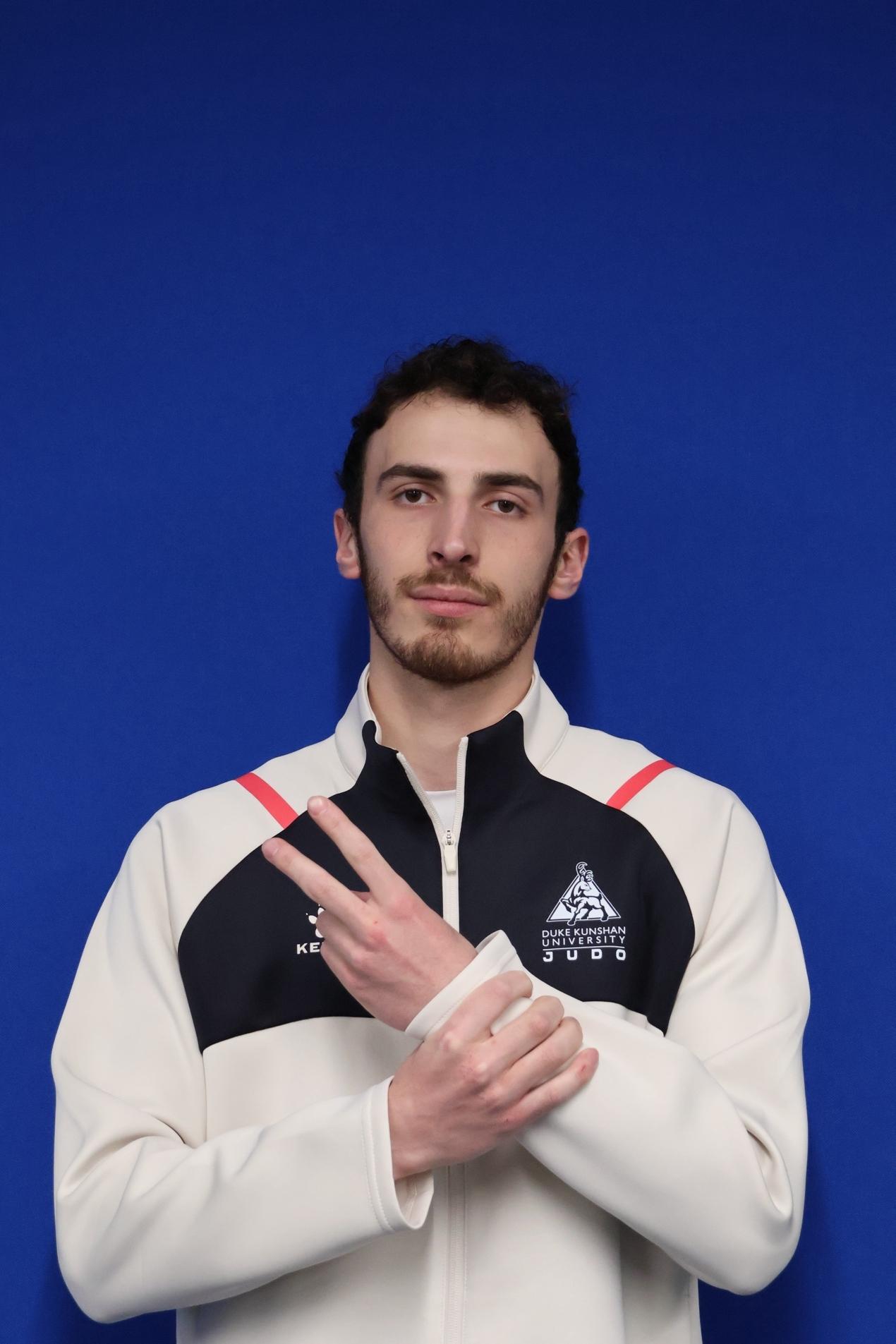
Andranik Pambukhchyan, class of 2028
Q:What first drew you to Judo, and what keeps you playing?
It happened quite randomly. I had been doing gymnastics throughout my childhood, but over time I grew bored and wanted to try something new. I was really interested in martial arts and wanted to give wrestling a try. However, there were no wrestling clubs near my home, so my parents started looking for something similar. They discovered a Judo club nearby with a very skilled and experienced coach, so they decided to take me there.
At first, I didn’t really enjoy it, but day by day, my feelings changed, and I gradually fell in love with the sport. Now, Judo has become a huge part of my life, even outside the tatami—the mat where Judo matches take place. It has taught me how to handle pressure and stay calm in any situation. The combination of being physically strong and mentally resilient is what keeps me practicing Judo.
Q:How does your team typically practice Judo during regular days, and how does the training routine change in preparation for a competition?
We train three times a week—Monday and Wednesday evenings, plus Friday mornings. Our coach also incorporates stretching and indoor training to keep us sharp. Before major matches like the Suzhou League or Sino-Foreign Cup, we add an extra session and focus heavily on tactics. Over the past year, the training has been intensive and high quality—exactly what I hoped for in varsity football.
As competitions approach, we include more sparring sessions to get used to the fighting rhythm and real-match situations, while still keeping training safe to prevent injuries. Additionally, all athletes pay close attention to managing their weight to remain within their designated weight categories.
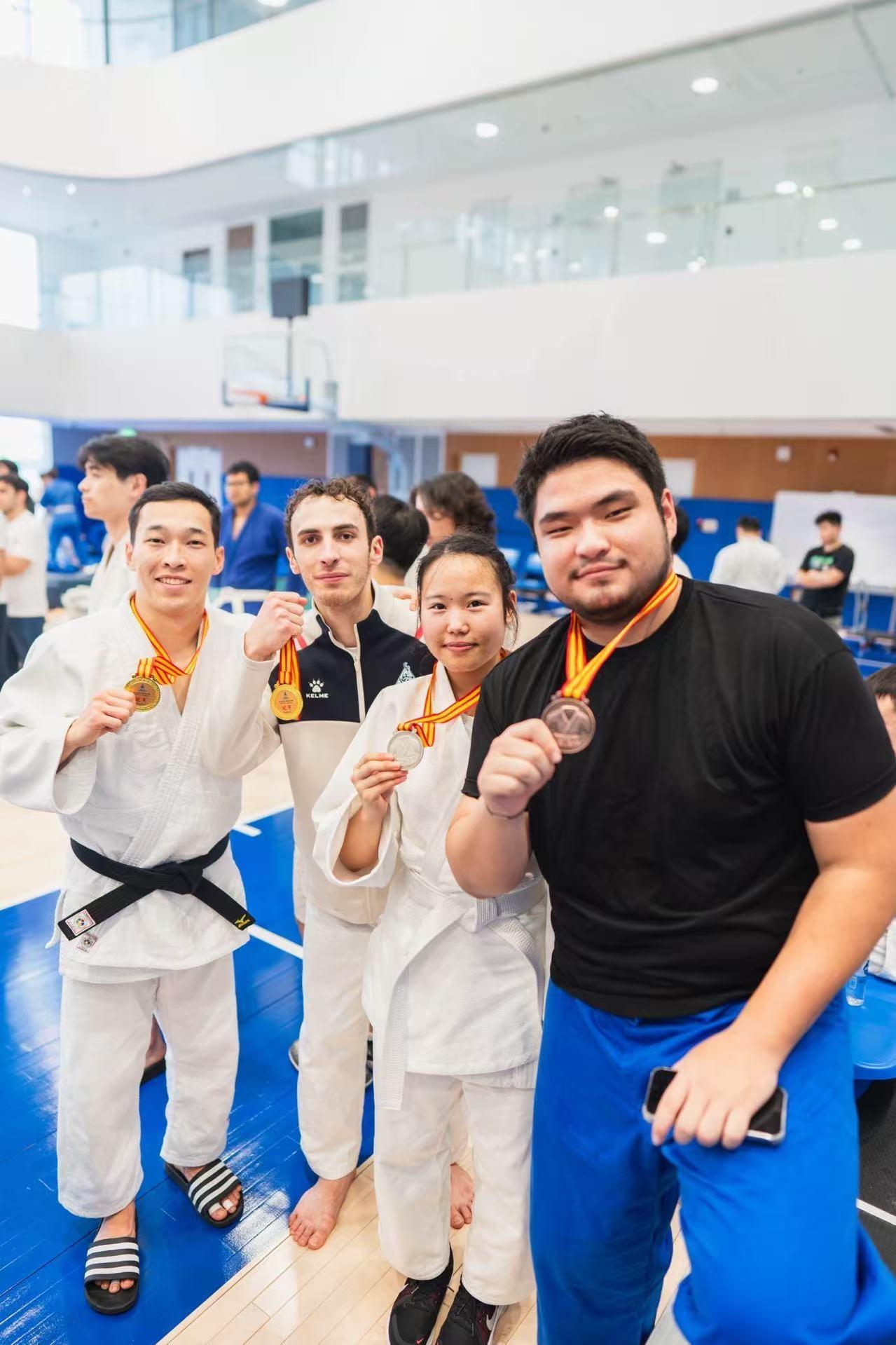
A group photo of Andranik Pambukhchyan and the award winners
Q: What is the core aspect that attracts you to judo: the etiquette, the techniques, the competitiveness or anything else?
Etiquette is one of the main aspects that attracts me to Judo. After coming to DKU, I gained a deeper understanding of the values that Judo promotes. It was truly surprising—and positively eye-opening—to see that people from all over the world share the same values and principles that my coach taught me back in Armenia.
I’m also deeply drawn to the techniques and dynamics of Judo matches. For me, there is no other sport where strength, flexibility, and speed are expressed in such a beautiful and harmonious way as in Judo.

A solo award photo of Andranik Pambukhchyan
Q:A toughest moment at DKU (injury, academics, or weight cut): what happened and how you bounced back?
I would say that I’m experiencing my toughest moment at DKU right now. Recently, I injured my foot during practice and fractured my toe — it became a real turning point for me. Throughout my life, I’ve always been involved in sports, not because I had to, but because I truly love it. It has become an essential part of who I am.
However, after the injury, my life completely changed — I couldn’t even walk. Going from such an active lifestyle to being unable to move was an enormous challenge. Despite that, I can say I’ve handled it well. Even though I haven’t fully recovered and can’t return to my usual training routine yet, I’m still focusing on improving other parts of my body and maintaining my strength.
This injury has taught me many lessons, but the most important one is to value what you have and appreciate every moment of your life. It reminded me that nothing is guaranteed — everything can change in an instant — and you’ll regret missed opportunities if you don’t take action when you can.
Q:In the 2025 Judo open tournament, you won the championship in the 66kg category.How many points would you give yourself for this performance? Why?
This competition was very important to me because it was the first time DKU hosted the tournament, and I wanted to perform my best and become the champion. At the same time, I was going through one of the most challenging academic periods of my university life. Despite the difficulties, I was determined to achieve my goal of winning the championship.
Martial arts are different from other sports. There’s a saying that perfectly describes this: “The champion wins the competition before it starts.” It means that the preparation and effort you put in beforehand determine the result you’ll achieve.
The most difficult part of this tournament was the weight cut. I competed in the under-66kg category, which meant I had to lose 4 kilograms in just three days. Anyone familiar with martial arts knows that weight cutting is part of the process—but also that it’s incredibly exhausting. During those days, what used to be my breakfast became my entire daily meal. Still, I managed to handle it well thanks to the right strategy and the strong support I received from my coach and teammates.
I won the competition without giving away any points to my opponents in all my matches. This victory, first and foremost, belonged to my coach, our team, and DKU—and only then to me. I would rate my performance a 6 out of 10, because even though I won, I know there is still a lot of room for improvement.
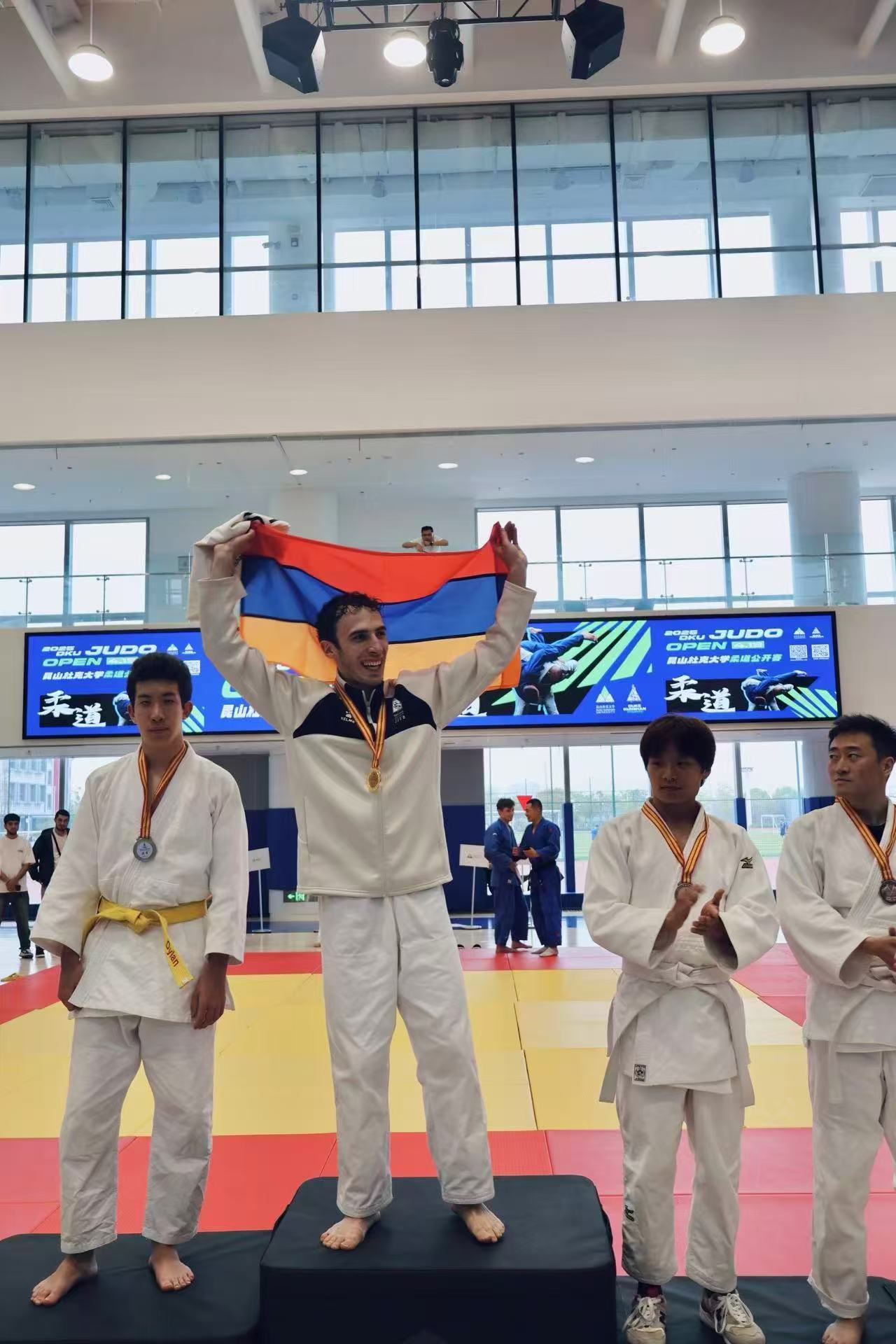
Photo of Andranik Pambukhchyan winning the men’s 66kg title at the 2025 Judo open tournament
Q:How do you mentally prepare for critical moments in a game, and does that approach translate into other aspects of your life?
Mental preparation is the most important part of the game. Even the strongest athlete can lose a match if they are mentally weak. Personally, I feel no pressure competitions because I know I’ve given my all during training and preparation. When you’ve truly put in the work, there’s no reason to doubt yourself.
I believe that emotions in these moments can often interfere with your performance. Still, I can’t say that I feel no emotions when I compete — like any athlete, I experience jitters before a match. But instead of letting them hold me back, I turn that nervous energy into excitement, and that excitement pushes me to perform at my best.
This mindset helps me not only on the tatami but also in other areas of life. Staying calm and maintaining control over the situation is my style of handling challenges, both in sports and beyond.
Q:What are your personal goals for the upcoming season, both as an individual player and as a team leader?
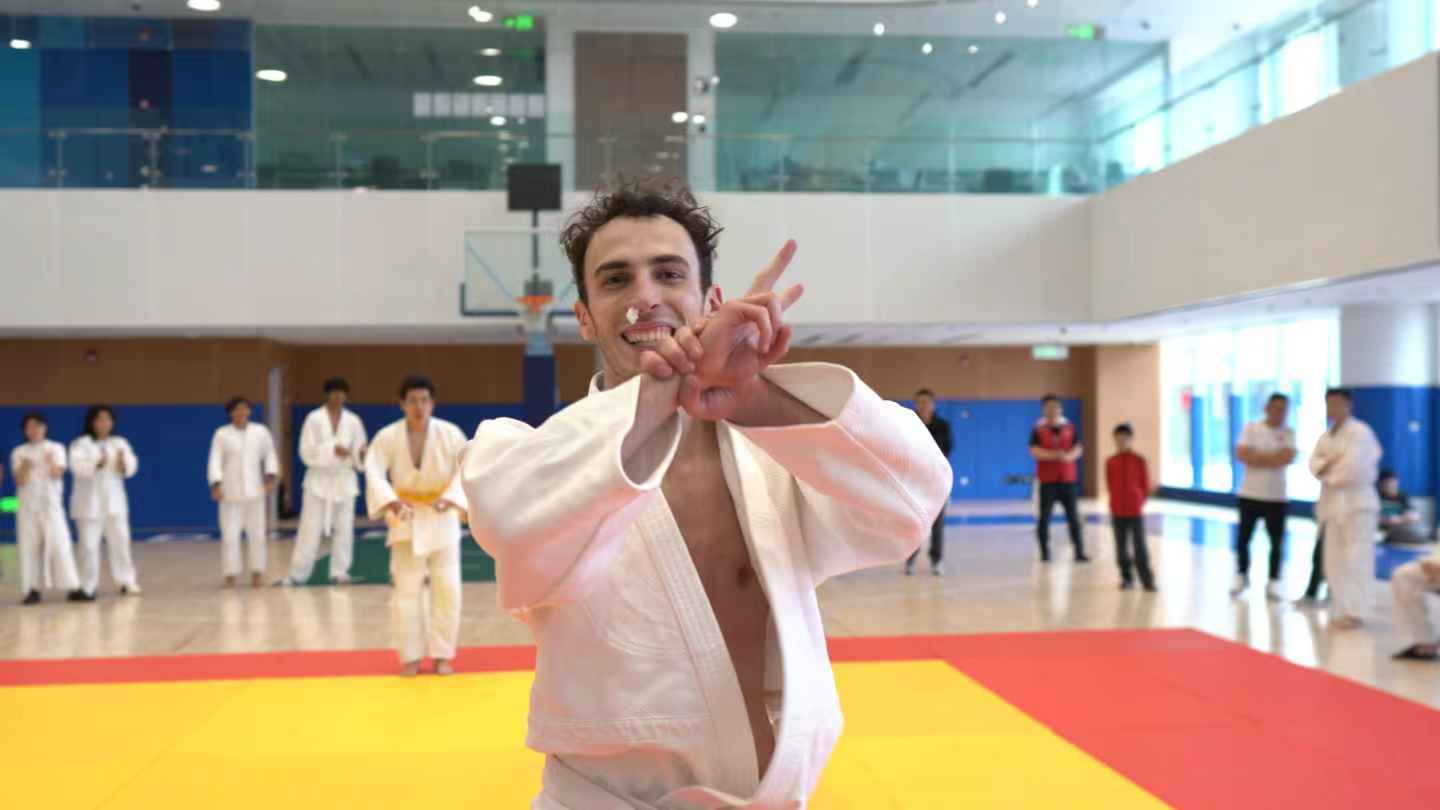
Photo of Andranik Pambukhchyan during the competition
Judo at DKU is still in its early stages, but it’s growing quickly. Thanks to the dedication of our coach, the athletics department, and all the Judo athletes, we became a varsity team last year — a huge milestone for us. The team is getting stronger, and we now have more opportunities to compete and showcase our skills. That progress truly motivates me.
As an individual, my goal for the upcoming season is to compete in larger tournaments, train with stronger opponents, and reach higher levels of performance. I want to keep pushing my limits and represent DKU at the highest standard possible.
As the team captain, my main goal is to support every athlete on our team. I want to share everything I’ve learned over my five years of practicing Judo and help others grow stronger — not only physically, but also mentally. I believe that by improving together and supporting one another, we can build a lasting legacy for Judo at DKU.
Ready to Take on Your Own Challenge?